Get Adobe Flash player

The New Learning Project -- Home Page News

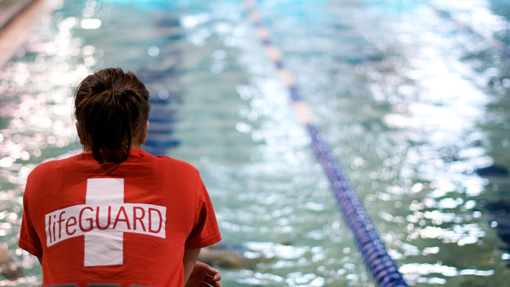
Lifeguard Training , May 2012 — Instructor, Marcos Levy

Share This Post

    LIFEGUARD TRAINING CERTIFICATION
    Includes First Aid and CPR

    SUNDAY MAY 20th 9am – 5pm
    MON- FRI MAY 21 – 25 4:30pm – 8:30pm
    PLACE: Castleton State College
    COST: $295
    Contact Marcos Levy
    802.492.3208
    TheNewLearningProject@gmail.com
    www.TheNewLearningProject.com

    If interest is high, additional courses will be added
    contact me to get on a waiting list

    Share This Post

      Being A Contributing Citizen — Stocking The First Aid Kit

      Share This Post


        I look in my car
        and I notice that I have no First Aid Kit on board.  I find it amusing because I do carry jumper cables. I know what I will do if my car battery dies, but what is my plan if I get injured or if one of my passengers is injured?    So I am off to the drug store to stock up a First Aid Kit for my car.  I will be checking to see if our Town Meeting Place is equipped as well.  I encourage us to continue to do our part as contributing citizens in our community. Let’s make sure we are prepared to help our family, our friends, and our neighbors in the case of a First Aid emergency.


        The American Red Cross recommends these items:

        • 2 absorbent compress dressings (5 x 9 inches)
          • Control bleeding (this can also be controlled effectively with roller bandages below)
        • 25 adhesive bandages (assorted sizes)
          • Cover cuts
        • 1 adhesive cloth tape (10 yards x 1 inch)
          • Secure bandages (bandages can also be tied off)
        • 5 antibiotic ointment packets (approximately 1 gram)
        • 5 antiseptic wipe packets
        • 2 packets of aspirin (81 mg each)
          • Some folks cannot take asprin (administering drugs should be left toEMS)
        • 1 blanket (space blanket)
          • Good for the winter and to help treat for shock
        • 1 breathing barrier (with one-way valve)
          • Protection against contracting germs
        • 1 instant cold compress
          • Reduce swelling
        • 2 pair of nonlatex gloves (size: large)
          • Protection against contracting germs
        • 2 hydrocortisone ointment packets (approximately 1 gram each)
          •  insect bites, poison oak/ivy
        • Scissors
          • helpful if tape is included in your kit
        • 1 roller bandage (3 inches wide)
          • For bleeding and for splints
        • 1 roller bandage (4 inches wide)
        • 5 sterile gauze pads (3 x 3 inches)
          • Open wounds
        • 5 sterile gauze pads (4 x 4 inches)
        • Oral thermometer (non-mercury/nonglass)
          • Care can be given without knowing the victims exact temperature
        • 2 triangular bandages
          • Very useful for splinting
        • Tweezers
          • Splinters and the like
        • First aid instruction booklet


        Use your judgment and your knowledge of first aid to determine how your first aid kit is supplied.  Many of these items are inexpensive.  Having them at hand can prove very useful.

        Marcos Levy
        The New Learning Project

        Share This Post

          Language As It Applies To Reading Music

          Share This Post


            Lost In Translation?  or  What’s in a name?

            To be fluent is the ability to translate what we see or feel instantly into language.  So it should be with the reading of music.


            When we read a note on the staff such as this one.  We are taught that name of this note is “G”.  When learning to play piano, for instance, we learn that the there is a key called “G”.  So we match them up and play the correct note.  I am not convinced that this method of translation is the most effective one for reading music for your instrument.  Translating a note on the staff into English and then re-translating the English letter to a particular key (or string, or fingering) is unnecessarily complicated and slow.  Better that seeing the placement of the note on the staff is directly followed by the striking of the correct key without any regard as to what the note may be called.

            While knowing note letter names remains important in the studying of music, a stronger and clearer connection between the music on the page and the playing of the instrument can be forged.  I believe it is worth future study.  To that end, I am near completion of a virtual piano and staff to practice this connection online.  Keep in touch, and check back soon.

            Marcos Levy
            The New Learning Project


            Share This Post

              Marcos Levy’s Favorite Shortcuts for Windows Machines

              Share This Post


                To Mouse or Not To Mouse — That is the question…

                The answer is up to your own personal preference.    I am a big lover of Keyboard Shortcuts.  I find them faster than the mouse in many cases, and I don’t have to interrupt my work flow to use them.  Here are my TOP TEN most used (and then some)

                Windows + D   – (hold the windows key down and then tap the “D” key)  – this shows desktop by minimizing all your open windows.  Pressing it again will bring the windows back.

                Windows + E — this opens the “My Computer” window.  I find this helpful when I have just plugged in a memory stick and need to find it.  Also a great place to start when trying to find anything on your computer.   Continue reading “Marcos Levy’s Favorite Shortcuts for Windows Machines” »

                Share This Post

                  Coming Soon – online music lessons

                  Share This Post

                    Marcos Levy is working on putting up a series of lessons to teach the Fundamentals of Music Theory.  These lessons are meant to propel musicians, would-be-musicians, and non-musicians alike into the world of music theory.
                    Learn or rediscover the elements of music:

                    •  How to identify the Half Step, the fundamental building block of all Western Music
                      • Using the Half Step to build intervals, scales, and chords
                    • What makes a Major Scale sound that way?
                      • How to build a Major Scale on any note by stringing together a series of Half Steps and Whole Steps.
                    • The story behind the Circle of Fifths.   It starts over 2000 years ago with Pythagoras and a piece of string!
                      •  How to use the Circle of Fifths to predict chords and key signatures
                    • How are the notes named?
                      • Naturals, Sharps, and Flats
                    • The story behind reading notes on a staff.  It starts over 1000 years ago withe a Pope called Gregory! 
                      • How to read music on its system of Clefs, Lines, and Spaces

                    Join your instructor, Marcos Levy, on this journey, as you master the Fundamentals of Music Theory.

                    Coming Soon,
                    In the meantime,

                    Enjoy Life!

                    Share This Post

                      Music Lessons 2011-2012

                      Share This Post

                        Music lessons at The New Learning Project are underway.  From Classical Music to the harpsichord solo from “In My Life” by the Beatles;  from Scott Joplin to Tom Petty;  students here are learning how to play these pieces while working on a sound foundation of music theory.     Contact us to arrange a lesson time. See you there.

                        Share This Post

                          We are updating our site as we celebrate 15 years of service!

                          Share This Post

                            Week of September 19th 2011
                            We are in the process of updating the site.  You can find all the info you need at
                            Our Previous Site

                            Share This Post

                              American Sign Language Classes

                              Share This Post

                                Click to find out more about fall classes
                                A new beginner’s ASL I course will be starting on October 5th, 2011
                                Click here to find out more.
                                People want to learn sign for a variety of reasons:  to sign with deaf family members, clients or co-workers; to sign with infants and toddlers; to aid communication with people who have a language inhibition or delay; because they themselves have lost hearing or speech ability; or simply because they’re curious and attracted to the language itself.

                                Share This Post

                                  Marcos Levy and Turiya Levy inspire their students to develop their own ability to ask questions, to follow their own ideas, and to own their success.